
Lock Ridge Park Photography

Two arched windows break through the heavy stone wall of Lock Ridge Furnace, offering a glimpse into the industrial past that shaped Alburtis and the surrounding Lehigh Valley. Their brick-lined frames rise in warm contrast against the cool, rugged masonry, a reminder of the craftsmanship that supported the regions booming iron industry in the late 19th century. Even in stillness, the structure carries the weight of its history etched into every uneven stone.

A quiet brick pathway leads toward the old carpenter's shop, its stone arches standing like sentinels of a vanished industry. The soft greens of summer wrap around the ruins, giving the scene a sense of calm that contrasts beautifully with the buildings once busy purpose. Light filters through the trees and across the worn masonry, guiding the eye forward as if inviting the viewer to step into the story held within these walls.
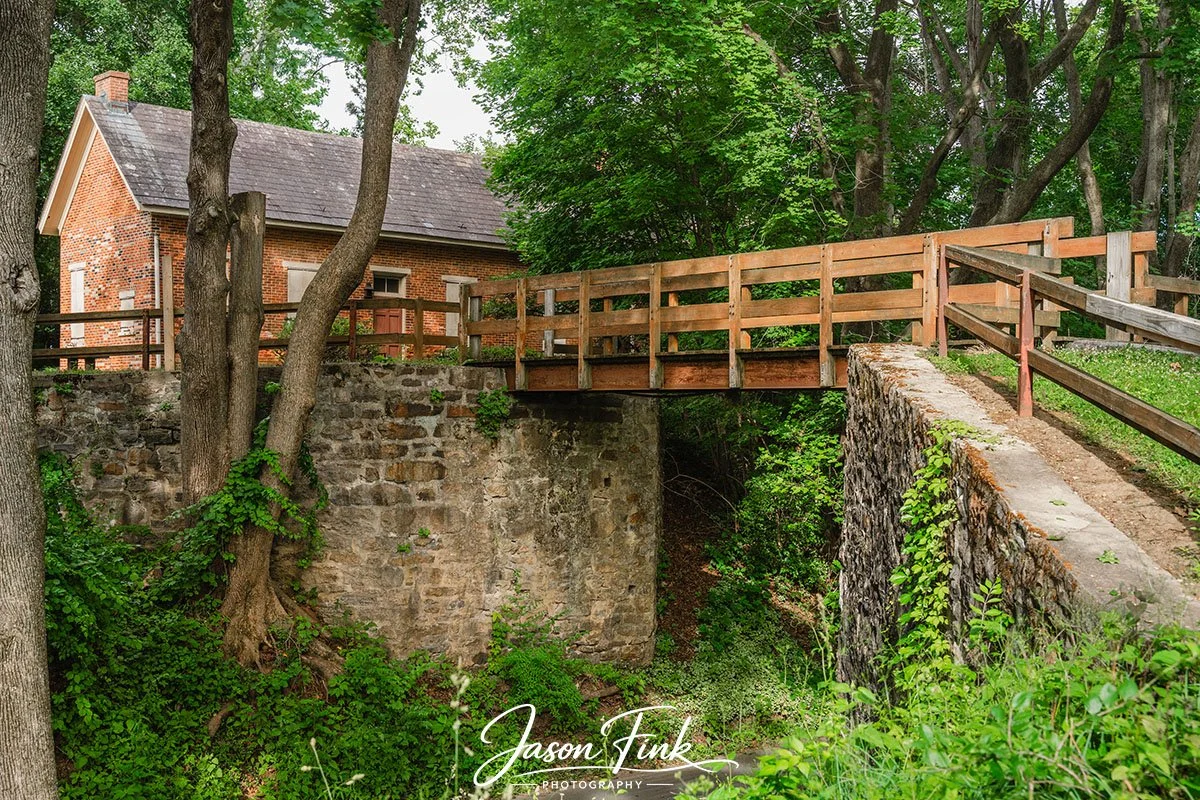
Soft light settles over the wooden bridge and the old weighmasters house at Lock Ridge Park, giving the scene a quiet, almost storybook calm. The weathered stonework and hand-built textures speak to the parks industrial past, when this property formed part of the Lock Ridge Furnace complex once a bustling center of iron production in the Lehigh Valley. Today, the bridge feels like a gentle threshold between eras, guiding visitors from the present into a landscape shaped by 19thcentury labor and craftsmanship.

The old carpenter shop doorway at Lock Ridge Park feels like a threshold between centuries. The roughcut fieldstone walls and redbrick arch speak to the iron industry that once powered the Lehigh Valley, their textures worn but still resolute. The arch frames a wash of summer green trees, grass, and soft light turning the doorway into a natural picture frame where the industrial past meets the quiet present. The leaves hanging from above soften the structure even further, as if nature is gently reclaiming what was once a place of constant labor.

Stone walls and open arches mark the quiet remains of the carpenters shop at Lock Ridge Park in Alburtis, Pennsylvania once part of a thriving 19thcentury iron furnace complex. Built of local fieldstone and brick, these ruins are all that remain of the workshop where craftsmen shaped the wooden patterns and tools that kept the furnaces running. Today, nature softens the industrial past, turning the old ironworks into a peaceful reminder of the Lehigh Valleys early industry
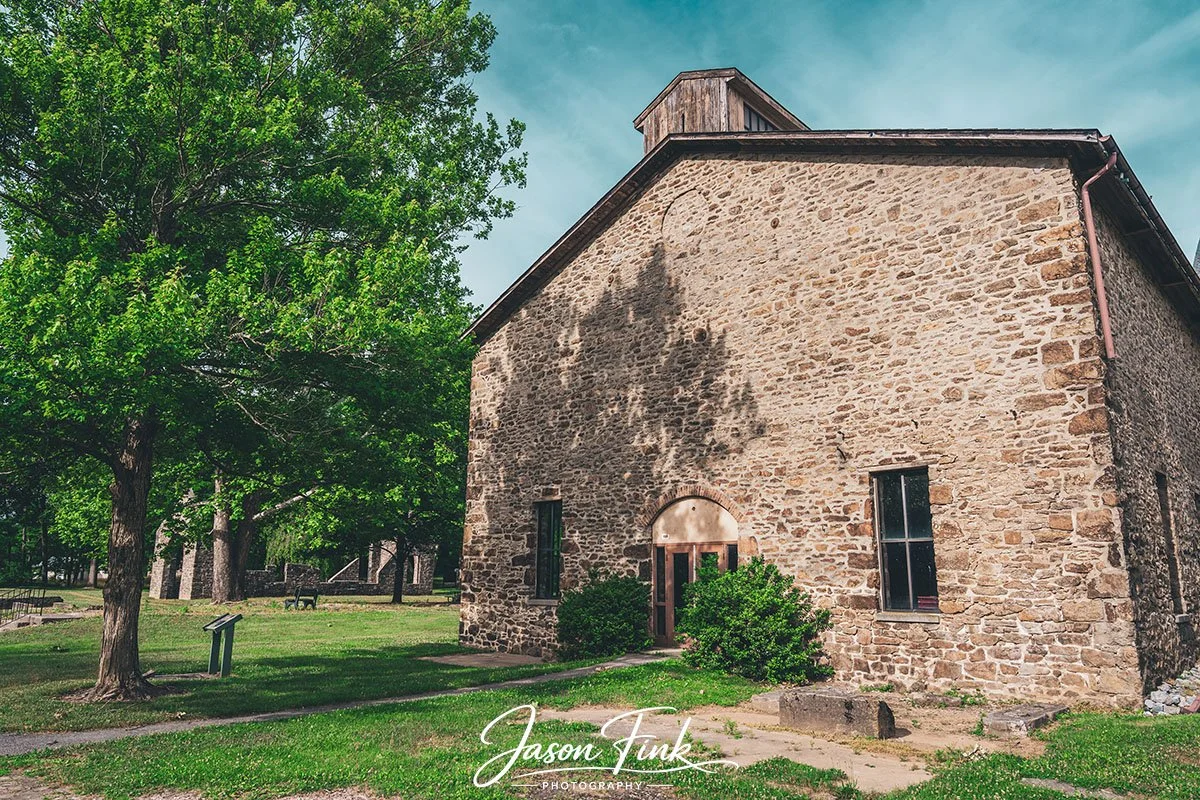
The cast house at Lock Ridge Park stands like a stone-built time capsule, its arched entranceway opening onto one of the Lehigh Valleys most enduring industrial landmarks. Once part of the Lock Ridge Iron Works, an operation that thrived in the late 19th century this structure helped support the regions booming iron industry, which fueled railroads, construction, and manufacturing across Pennsylvania. Today, the weathered masonry, simple wooden door, and quiet lawn surrounding it offer a peaceful contrast to the heat and noise that once defined this site. Set within Alburtis, a community shaped by the rise and fall of iron production, the cast house now serves as a reminder of the ingenuity and labor that built the region. The preserved buildings scattered through the park echo the era when anthracite fueled furnaces transformed raw ore into the iron that powered Americas growth. In the calm of the present day, the structure invites visitors to step closer, look through its historic doorway, and imagine the lives and stories forged here more than a century ago.
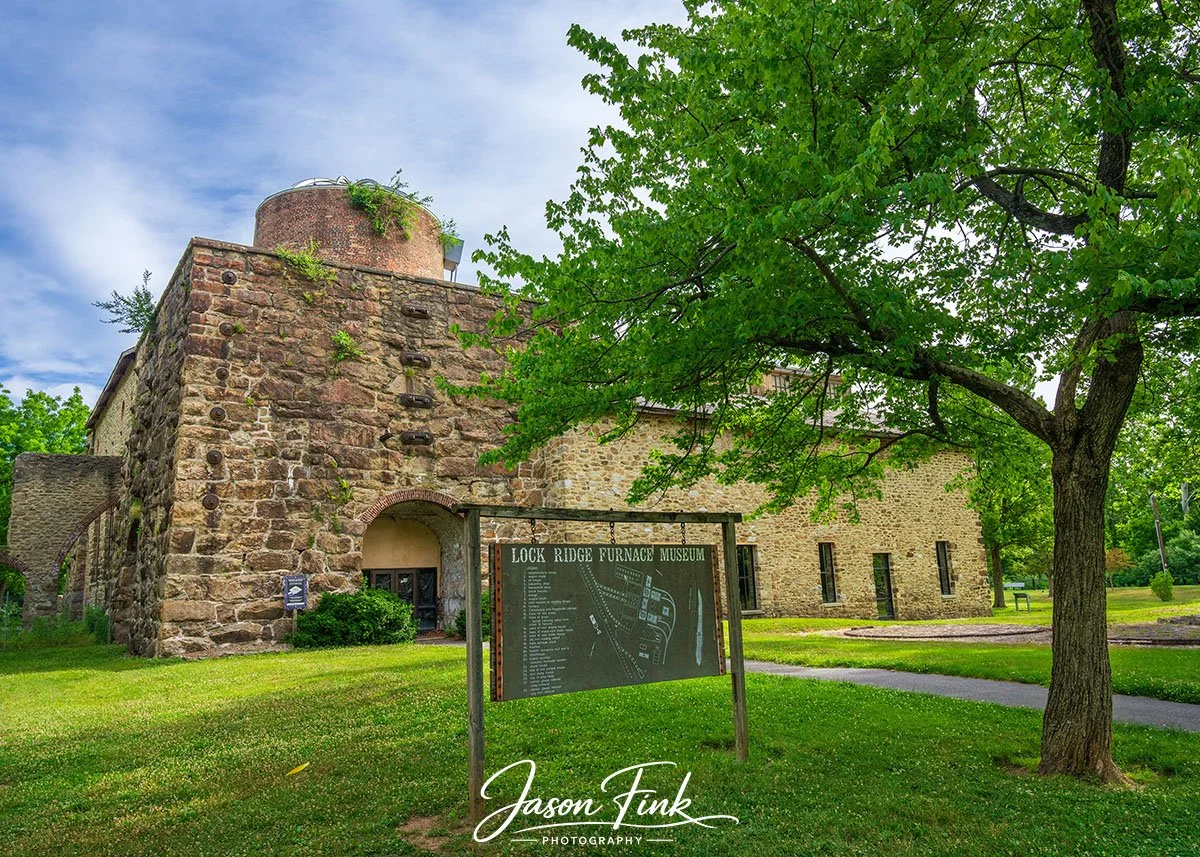
The Lock Ridge Furnace Museum stands here like a stone bound memory of Alburtis industrial past, its massive masonry walls and towering stack rising from the green landscape with a quiet, enduring presence. The weathered sign in the foreground feels like an invitation; an opening chapter guiding visitors toward the stories forged in iron and labor that once defined this corner of the Lehigh Valley. Sunlight drifts across the grass and the old furnace alike, softening the edges of a place built for fire and industry.

A quiet curve of trail slips beneath the old stone bridge, where the forest at Lock Ridge Park gathers close and green around the path. Sunlight filters through the canopy in soft, shifting patches, brushing the paved walkway and the remnants of the wooden rail structure below with a warm, early morning calm. The mix of stone, timber, and thriving vegetation creates a scene where the past feels gently folded into the present, as if the landscape itself remembers every footstep that's passed through.
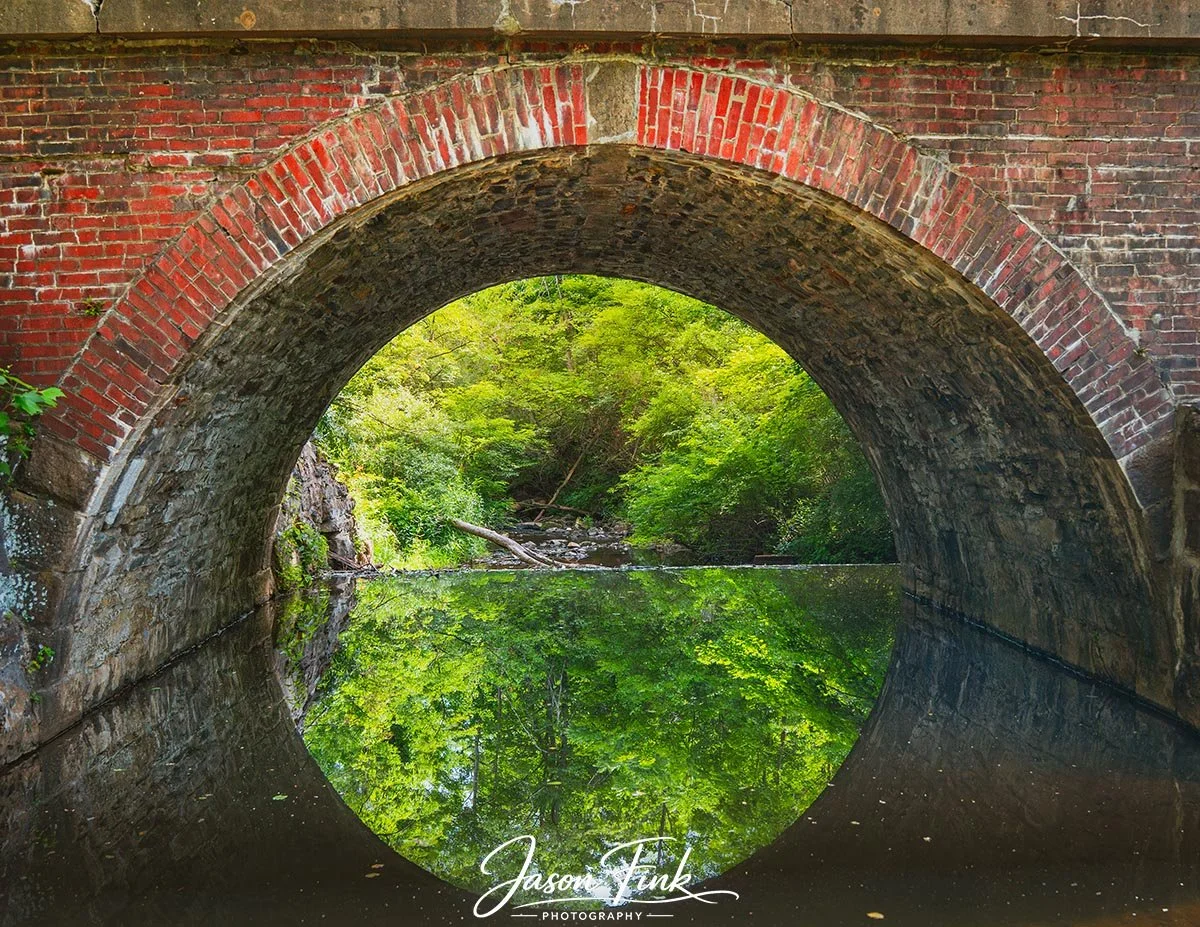
A redbrick arch rises over still waters of the Swabia Creek in this quiet corner of Lock Ridge Park, its reflection forming a near perfect mirror beneath the curve. The mix of brick and dark stone hints at the site's industrial origins, when the Lock Ridge Furnace complex shaped both the landscape and the local economy of Alburtis. Today, the bridge feels softened by time, framed by lush summer foliage that leans gently toward the creek.
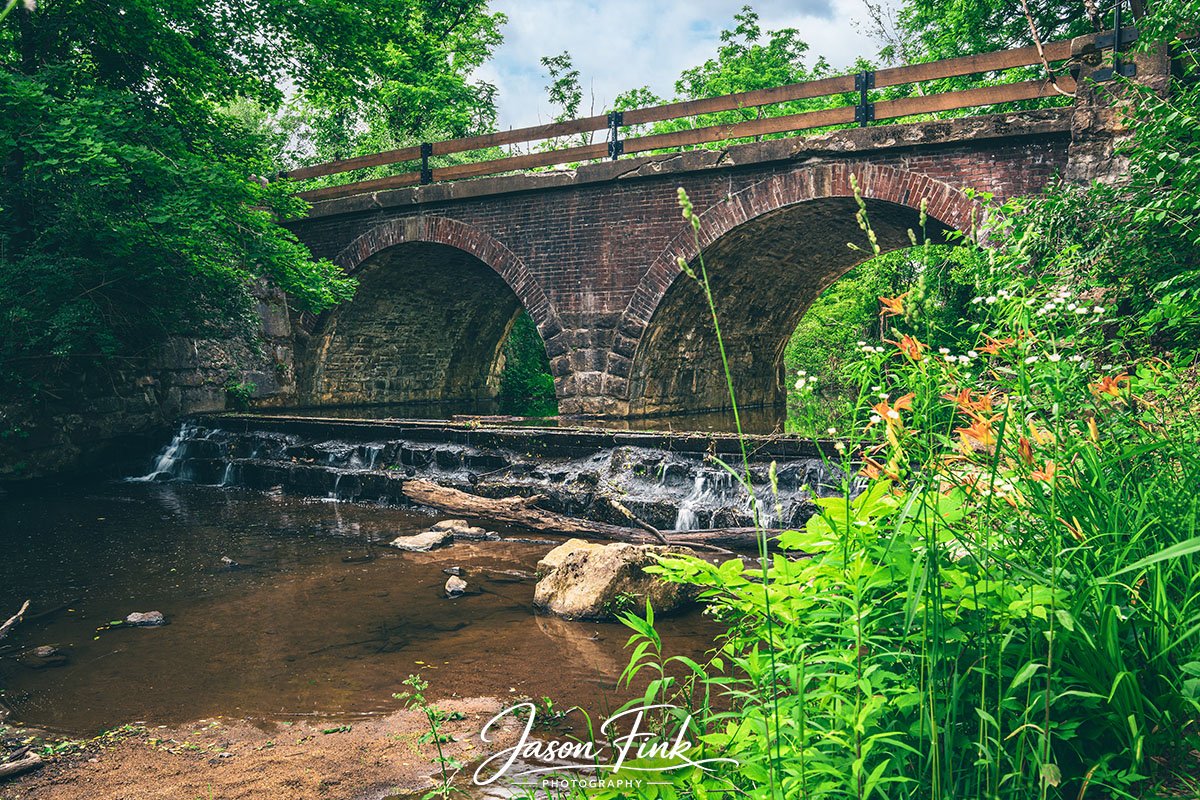
Swabia Creek winds softly beneath the old stone arches, carrying the quiet history of Lock Ridge Park in its gentle flow. The bridge rises with warm, weathered brick, its wooden rail catching the afternoon light as water tumbles over rock ledges below. Summer foliage gathers close, wrapping the scene in greens and golds, while wildflowers lean toward the creek as if listening to its steady rhythm.
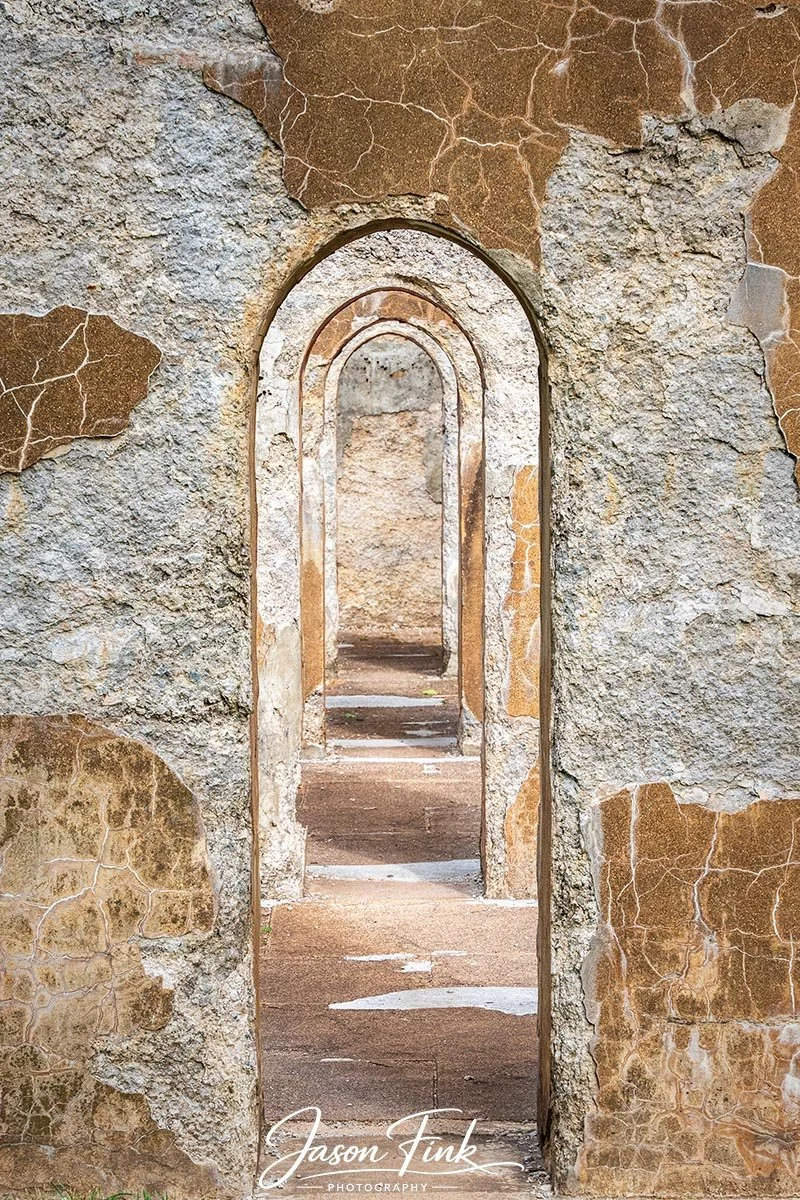
These embedded archways at Lock Ridge Park create a striking sense of rhythm and depth, each opening revealing the next in a perfectly aligned sequence. The weathered stonework textured with decades of exposure and subtle shifts in color adds a tactile richness that pulls the viewer deeper into the frame. Light filters softly through the repeating doorways, guiding the eye forward and emphasizing the craftsmanship that once supported the trestles above.

These arched windows of the Lock Ridge Museum once part of the 19thcentury Lock Ridge Iron Furnace complex carry the quiet dignity of Pennsylvania's industrial past. Their tall brick framed curves and roughcut stone walls reflect the architectural language of the anthracite iron era, when the furnace village in Alburtis thrived with foundry workers, pattern makers, and craftsmen who kept the ironworks running.